What to Put in Blue Recycle Bin California

Ask the Waste matter Magician to discover out where and how to properly dispose of an item.
The Benefits of Recycling
Bad things happen when the wrong items are placed in the Bluish Bin. How Bad? Bad enough that it can harm equipment, cause workplace injuries at the recycling facility and ruin otherwise perfectly skilful recyclables. Contaminated recycling is currently costing the Urban center millions annually. Approximately thirty per cent of what is put in the Bluish Bin doesn't vest there.
General Recycling Instructions
- Put items in loose and not bagged. Use a clear plastic bag merely if necessary.
- Prepare containers in three easy steps:
- empty food, liquids or other contents
- rinse to remove any residue
- identify lid/cap on (including sprayers and pumps)
- Place all black and/or compostable plastic (e.k. food containers, numberless, cutlery) in the garbage.
- Flexible multi-layered packaging (e.yard. stand-upwards pouches) and plastic-lined paper
(e.g. instant oatmeal packs) go in the garbage. To check if paper is lined with plastic, rip it slowly. If you lot encounter any plastic lining, the item goes in the garbage. - Carve up plastic bags/over-wrap from newspapers, flyers, magazines, h2o/soft drink cases. Recycle separately.
- Put shredded paper in a articulate plastic bag.
- Put pieces of paper the size of a business concern card or smaller in an envelope or add together to articulate bag of shredded paper.
- Put foam pieces smaller than 10 cm (4″) x 10 cm (4″) in the garbage.
- Non all items with a recycling symbol
 are accepted in Toronto's Blue Bin recycling program.
 - If unsure about whether or non an item can exist recycled, cheque Waste product Wizard.
Items Accustomed in the Bluish Bin (Recycling)
Five Items That E'er Become in Recycling
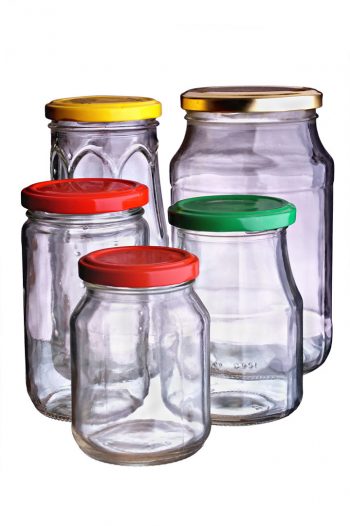
Glass
- Bottles, jars (lids on)
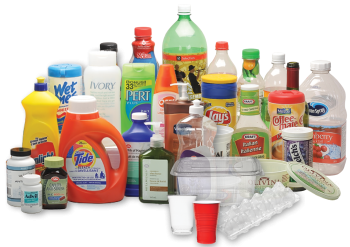
Rigid Plastics
- Food jars, tubs (lids on)
- Articulate food containers/clamshells (due east.g. from berries, mixed greens)
- Disposable plates, cups
- Drink bottles (lids on)
- Detergent, soap, shampoo bottles (lids/sprayers/pumps on)
- Articulate CD/DVD cases (empty; black cases are garbage)
Note: all blackness and/or compostable plastic goes in the garbage.
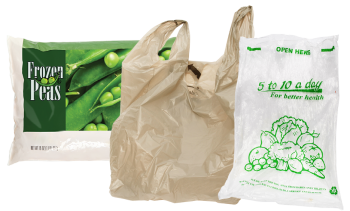
Soft, Stretchy Plastics
- Grocery/retail shopping bags
- Produce/bulk food bags
- Bread numberless (non-foil)
- Milk numberless (outer handbag, rinsed inner pouches)
- Sandwich bags (including resealable)
- Frozen fruit/vegetable bags (no stand up-upwards pouches)
- Over-wrap (e.chiliad. from toilet paper, napkins, paper towels, water/soft drink cases)
- Paper/flyer/magazine bags (separate paper from bag, recycle separately)
- Dry cleaning bags
- Diaper/feminine hygiene outer numberless
- Garden soil/manure/compost/road salt bags
Note: remove production before recycling.
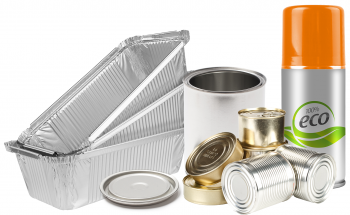
Metal
- Aluminum/steel nutrient & beverage cans
- Aluminum trays, burner liners, pie plates, roasting pans
- Cookie tins
- Droplets cans (empty; lids on)
- Paint cans (empty; remove lids and recycle separately)
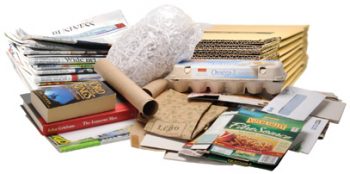
Newspaper*
- Bags (without wax or plastic lining/blanket)
- Advertising postal service, fine newspaper, envelopes
- Newspapers, flyers, directories, magazines, catalogues (remove over-wrap, recycle separately)
- Gift wrap, tissue paper, cards (no ribbons, bows, foil wrap)
- Shredded paper (put in clear plastic bag, necktie airtight)
- Soft/hard cover books
*Identify pieces smaller than a business carte du jour in envelope or add to bag of shredded paper.
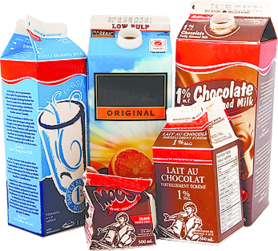
Paper Containers
- Cartons and boxes (e.thousand. from juice, milk, soup; straws are garbage)
- Spiral wound cans (east.g. from chips, nuts, frozen juice – place metal end in can and pinch closed; pull-off strips are garbage)
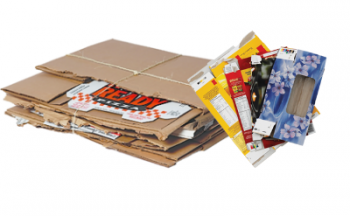
Cardboard
- Boxboard (eastward.yard. from cereal, tissue, detergent, shoe; remove liners, flatten, no freezer boxes)
- Corrugated cardboard (unwaxed, flattened; pizza boxes must be empty; remove over-wrap from water/soft drink cases, recycle separately)
- Rolls (e.one thousand. from toilet paper, paper towel, wrapping paper)
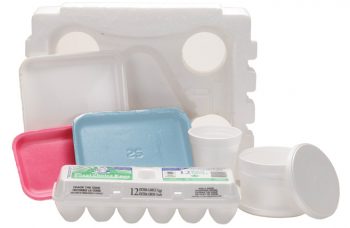
Cream Polystyrene
- Foam food and protective packaging (due east.g. plates, cups, egg cartons, takeout containers, meat/fish trays; plastic wrap & absorbent pad are garbage)
- Protective packaging (eastward.chiliad. from aircraft, electronics; foam packaging peanuts are garbage)
Note: Nutrient/drinkable packaging must be empty and rinsed (otherwise, place in garbage). Black cream items and pieces smaller than 10 cm (4″) x 10 cm (4″) go in the garbage).
Items Not Accustomed in the Blue Bin (Recycling)
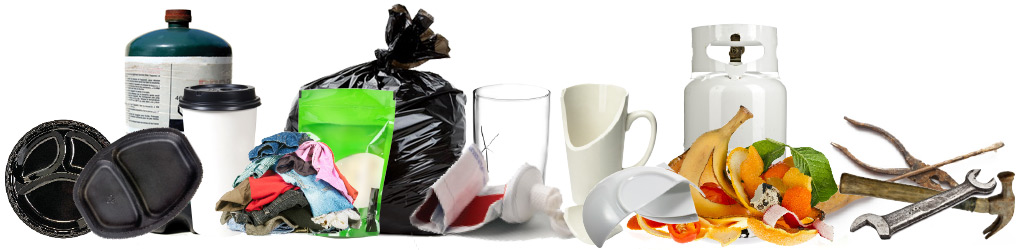
Medical, Home Healthcare & Personal Protective Equipment Waste
- Needles and syringes are Household Hazardous Waste.
- Place the following inside two plastic numberless and and so in the garbage:
- Dispensable masks, gloves, gowns, pads
- Soiled dressing, sponges, gauze
- Catheters & colostomy bags
- Iv bags & tubing
- Dialysis waste
Household Hazardous Waste
- Household hazardous waste items such as propane/helium tanks, batteries, meaty fluorescent lite bulbs, pesticides, pigment, etc. must never be put in recycling or garbage.
- Take to a Drop-Off Depot or for amounts between 10 to 50 litres/kilograms, volume a free Toxic Taxi pickup online or by calling 311.
Plastic Packaging
- Any items that are black, including takeout containers, numberless, plant trays and flower pots
- Any items that are labelled or marketed equally compostable or biodegradable, including numberless, containers, cutlery
- Stand up-upwardly resealable pouch bags
- Liner bags (e.g. from cereal, cookies, crackers)
- Wrapping around pre-packaged foods similar meat and cheese
- Nutrient wrap (i.eastward. Cling wrap)
- Bubble wrap
- Clasp tubes for dwelling and personal products (due east.m. from toothpaste, balm)
- Paint cans
Other Plastic
- Straws
- Wearing apparel hangers
- Binders
- Toys
- Cassettes, CDs, DVDs
Drinking glass
- Drinking spectacles, dishes, cups, crystal
- Ceramics, pottery
- Window glass
- Light bulbs
- Mirrors
- Pots, pans
Metal
- Tools, fleck metal, auto parts
- Dress hangers
- Pots, pans
- Minor appliances (e.g. kettles, toasters, pilus dryer)
- Electronics
Aluminum
- Foil nutrient wrap, potato chip bags
- Blister packs (e.g. from gum, pills)
- Metallic gift wrap and bows
Textiles
- Clothes, shoes
- Carpets, curtains
- Bedding
Newspaper Products
- Tissues, napkins, paper towels
- Beverage cups
- Frozen nutrient boxes (they have a lining or blanket)
- Waxed paper-thin
- Whatsoever paper with wax or plastic lining or blanket
Other Items
- Cables, hoses, ropes
- Woods (e.g. fruit crates, chopsticks)
- Renovation waste (must be taken to a Drib-Off Depot)
Why We Can't Have Certain Items in the Blue Bin
Mutual Recycling Mistakes
Food and organic waste
Nutrient scraps like apple cores, eggshells or expired leftovers belong in your Dark-green Bin. When yous mistakenly toss food scraps in your Blue Bin, food balance and particles get soaked upwards by paper and can ruin big batches of otherwise adept recyclables.
Containers with leftover food
Please empty and rinse food containers before tossing them in your Blue Bin. When y'all don't, the residue from items like jars and take-out containers gets soaked upwards by paper and can ruin large batches of otherwise good recyclables. Put any food scraps in your Green Bin.
Clothing and textiles
Old clothes, shoes, blankets, and defunction don't belong in the Blue Bin. They tin can become defenseless in sorting machines, damage equipment and cause workplace injuries at the recycling facility. Instead, donate items that are in proficient condition to not-for-profit agencies or drop them off for reuse at Community Environment Days. If your items tin't be donated, put them in the garbage.
Hot potable cups
Most dispensable hot beverage cups are fabricated of newspaper, but lined with plastic, which makes them difficult to sort mechanically at the recycling facility. Conventional paper mills do not desire coffee cups because of their low-quality paper and inner liner, which does not pulp easily and causes clogging in the pulping process. The dyes in the newspaper tin also affect the quality of the end paper product and brand it hard for paper mills to turn cups into other paper-based products. As a issue, the Urban center has not been able to find a stable market (i.eastward. buyers) for java cups. Delight identify coffee cups in the garbage. Not-black plastic lids and paper sleeves should be removed and placed in the Blueish Bin.
Black plastic
Black plastic of any kind, such as accept-out containers and black garbage bags, is not accepted in the City'southward recycling plan. There are two master reasons for this:
- there is no stable market for the volume of black plastic generated in Toronto
- black plastic cannot be sorted mechanically at the recycling facility because the optical sorting engineering science cannot recognize it.
Delight dispose of all black plastic in the garbage.
VHS tapes, chains, hoses and electrical cords
These do not go in your Blue Bin. They can get tangled in sorting machines, damage equipment and cause workplace injuries at the recycling facility. Donate unwanted VHS tapes or meet if your local electronics shop's has a recycling program. Throw unwanted cords, hoses and cables in your garbage.
Of import Reminder Most Coffee Pods
The City does not accept coffee pods in its Blue Bin recycling plan. All coffee pods, including those that are labelled or marketed as recyclable, must exist disposed of in the garbage or returned to retailers/manufacturers who have accept-back programs.
The City commissioned inquiry related to disposal of single-serve coffee and tea pods. The findings include feedback from Toronto residents about utilise, attitudes and disposal behaviours
Important Information About Compostable and Biodegradable Items
The Urban center does not take the following items marketed or labelled equally compostable or biodegradable in its Blueish Bin recycling program:
- containers/packaging
- coffee pods
- coffee cups
- bags
- cutlery
These items, which may be made of or lined with a bio-based plastic, must be disposed of in the garbage. Alternatively, products can be returned to retailers/manufacturers who have take-back programs.
Why the City doesn't accept these items in the Blue Bin
Compostable and biodegradable plastics are non recyclable, equally they are made of materials that are meant to intermission down versus materials that can be made into something new. Once recyclables are collected and sorted, they are baled and sold to partially beginning the cost of collecting and separating recycling. At the recycling facility, compostable and biodegradable plastics get mixed with conventional plastics. When this happens, it lowers the quality of the plastic bales making them less valuable and more than difficult to sell.
What Happens to Recycling?
Recycling is collected from the adjourn or a building and brought to i of the Urban center'due south Transfer Stations. From there, it is loaded onto tractor-trailers and brought to a Material Recovery Facility in Toronto owned by Green For Life Environmental Inc., which the City contracts to process its recycling.
Once at the Material Recovery Facility, the recycling is manually and mechanically sorted – using a series of belts and conveyors, screens, magnets, optical sorting and AI systems – into the unlike types of materials, such as plastics, paper, aluminum and glass. The different types of materials are and then baled and sold to re-processors/markets to be made into something new.
The coin that the City gets from the auction of recyclables is only enough to partially offset the cost to run the recycling program.
Changes to global recycling markets over the last couple of years have resulted in an oversupply of recycling material, with fewer markets where it tin can be sold. While the Urban center was affected by this, information technology is even so able to find markets to have Toronto's recycling and make it into something new, it is just receiving less revenue for information technology.
The recycling system in Toronto is still strong. It reduces the amount of waste going to landfill and helps to conserve natural resources and reduce greenhouse gas emissions. It's still worth it to recycle and increasingly important to recycle correct.
Transition of the Recycling Plan to Extended Producer Responsibility
Extended Producer Responsibleness (EPR)
- On June three, 2021 the Province of Ontario finalized the regulation to transition Ontario's Blue Box Programme to full EPR.
- EPR will make producers fully accountable for the packaging and newspaper they put into the Ontario marketplace and shift the operational and financial responsibilities of recycling away from municipalities.
- Ontario municipalities will transition their Blueish Box Programs to EPR between July 1, 2023 and December 31, 2025.
Toronto'southward transition to EPR
- The City of Toronto will be one of the first municipalities to transition to EPR in year 1 on July 1, 2023.
- Toronto residents should non feel any changes to their Blue Bin recycling program during the transition years (2023 – 2025).
- The greatest change to the City's integrated waste management organisation will take place in 2026 when producers accept fully taken over all municipal Blue Box programs and begin to implement a standardized plan.
- The City has established a dedicated EPR team and is actively working to prepare for Toronto'south transition.
- There are still a number of unknowns related to EPR, including:
- what the overall recycling system volition wait similar
- what the Urban center's role volition be in the transition years and beyond
- the resulting impacts to the City and Toronto residents.
Benefits of EPR
The benefits of EPR include:
- standardization of what is accepted in the Blue Box beyond the province as of 2026 when producers have fully taken over recycling.
- potential reduction and/or innovation in packaging
- price savings for the Metropolis
- potential for increased waste diversion from landfill once recovery targets come up into effect in 2026 and onwards.
EPR adjacent steps
- In the near future, producers volition brainstorm to design what the standardized Blueish Box Program volition look similar in 2026 after all municipal programs have transitioned.
- The Urban center has been advocating for the all-time interests of Toronto and its residents throughout the development of the regulation and will continue to do so throughout the development of the new organisation and transition to EPR.
- Solid Waste Management Services will report dorsum to City Council in 2022, once the Blue Box Programme details go bachelor and the impacts to Toronto's integrated waste material management arrangement are better understood.
Recycling Beverage Container Airplane pilot in Parks
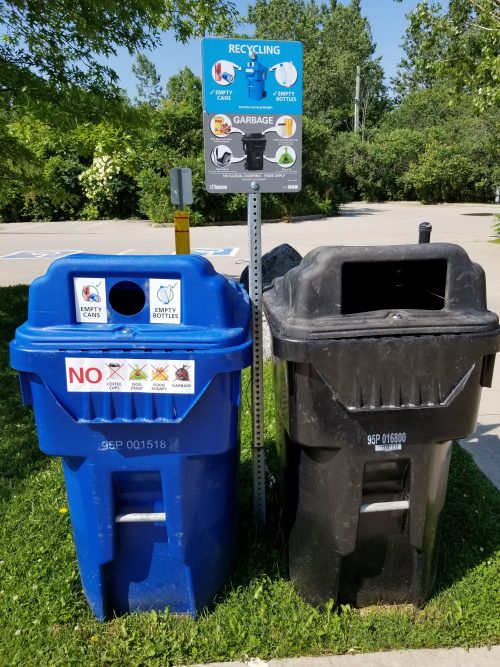
In spring 2021, the City of Toronto installed new lids on 300 recycling bins in parks beyond the urban center. The new bin lids have a hole to exclusively capture empty beverage cans and bottles. Stickers adhered to the bins and signage beside the bins indicate what items are accustomed and not accepted in the recycling bins.
While the City works to divert as much waste as possible from landfill, the material in public recycling bins is ofttimes heavily contaminated with not-recyclable items, such every bit containers with food and liquid in them, coffee cups, black plastic and pet waste material. When this happens, much of the recycling is ruined, sending it to landfill.
The goal of this pilot projection is to increase the corporeality of material the City can recycle from parks. Data collected from the airplane pilot will be used to determine whether defended bins for bottles and cans can contribute to a long-term strategy to reduce contamination and increment the amount of recycling collected from park bins.
Source: https://www.toronto.ca/services-payments/recycling-organics-garbage/houses/what-goes-in-my-blue-bin/
0 Response to "What to Put in Blue Recycle Bin California"
Post a Comment